Master Plan: The Brave Knight's Addition Challenge (Grades 1-2)
1. Introduction & Theoretical Foundation
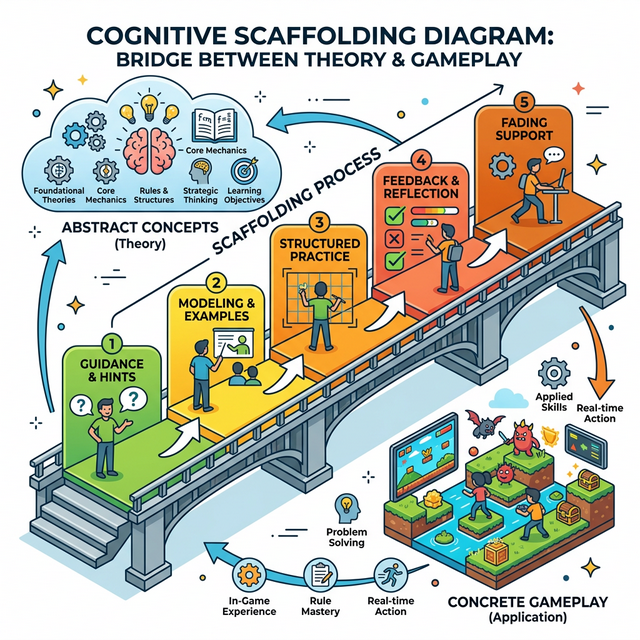
In the modern classroom, standard "drill and kill" worksheets often fail to stimulate the deep cognitive engagement required for long-term mathematical retention. Math Quest is designed not just as a game, but as a "Cognitive Scaffold"—a tool that bridges the gap between abstract numerical symbols and concrete problem-solving scenarios.
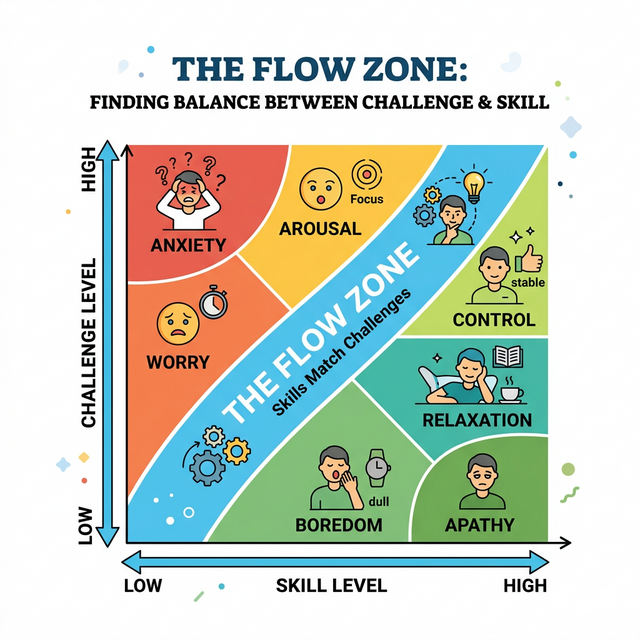
The "Math Quest Quest" lesson plan leverages the Challenge-Reward Loop to keep students in the "Flow Zone" (Csikszentmihalyi, 1990). By placing addition and subtraction within a narrative framework—defending a kingdom from encroaching slimes—we switch the student's motivation from compliance-based to mastery-based.
Curriculum Alignment: Common Core Standards
- CCSS.MATH.CONTENT.1.OA.A.1: Use addition and subtraction within 20 to solve word problems involving situations of adding to, taking from, putting together, taking apart, and comparing.
- CCSS.MATH.CONTENT.2.OA.B.2: Fluently add and subtract within 20 using mental strategies. By end of Grade 2, know from memory all sums of two one-digit numbers.
2. Learning Objectives
By the end of this 45-minute session, students will be able to:
- Identify the mathematical operation (addition or subtraction) required to solve a "Battle Scenario."
- Mentally calculate sums and differences within 20 within a limited "Action Point" window (gameplay).
- Articulate the relationship between numbers as "Health Points" and "Damage Values," transitioning from concrete objects to abstract values.
3. Preparation & Materials
- Hardware: Individual tablets, Chromebooks, or a computer lab.
- Software: Access to OMG.LAND/games/math-quest.
- Physical Assets:
- "Quest Logs" (Printable worksheets for tracking battle results).
- "Power-Up Stickers" (Visual rewards for level completion).
- Whiteboard for the "Strategy Council" group session.
4. The 45-Minute Lesson Roadmap
Phase I: The Strategy Council (5 Minutes)
Goal: Contextualize the math before the play begins.
- Activity: The teacher presents a "King's Dilemma" on the whiteboard.
- Scenario: "Our kingdom has 12 knights. 5 more arrive from the North. How many knights defend the castle?"
- Discussion: Ask students why we add. Introduce the concept of "Reinforcements" (+). Repeat with "The Dragon's Fire" (subtraction -).
Phase II: Training Camp (10 Minutes)
Goal: Individual skill assessment.
- Activity: Students log into Math Quest and enter "Practice Mode."
- Task: Complete 15 addition problems to "sharpen their swords."
- Teacher's Role: Circulate the room. Identify students struggling with the carry-over concept (e.g., 8+7) and provide immediate 1-on-1 feedback.
Phase III: The Great Slime Siege (20 Minutes)
Goal: Core gameplay and conceptual application.
- Activity: Main quest gameplay.
- The Challenge: Students must reach Level 5. To do so, they must defeat bosses that require "Mental Combo Attacks" (solving multiple problems in under 30 seconds).
- Data Collection: Students must record their "High Score" and the "Strongest Problem" (the hardest equation they solved) in their Quest Logs.
Phase IV: The Victory Feast (10 Minutes)
Goal: Metacognition and reflection.
- Activity: Classroom discussion.
- Questions:
- "What was harder: the slimes or the fast-acting timer?"
- "Did anyone use a 'number line' strategy in their head when the numbers were high?"
- "How is defeating an ogre with '15 HP' like doing 15 - 5 - 5 - 5?"
5. Differentiation & Inclusivity
For Neurodivergent Learners (SPED)
- Reduced Sensory Load: Allow students to use the "Quiet Mode" in the game settings to minimize auditory distractions.
- Extended Time: Permit "Slow-Motion Mode" if the reaction speed is a barrier to mathematical processing.
- Predictable Routine: Provide a visual checklist of the lesson phases to reduce transition anxiety.
For English Language Learners (ESL)
- Visual Vocabulary: Use the "Emoji Labels" in the Quest Logs.
- Contextual Clues: The game uses universal icons (Swords for addition, Shields for totals) which bridge the gap for students still learning English syntax.
For Advanced Learners (Gifted & Talented)
- The "Overlord" Challenge: Ask students to calculate the "Minimum Action Points" needed for a level—turning the game into an optimization problem rather than just arithmetic.
- Script Writing: Have them write a "Battle Report" explaining the logic of their victories using full sentences and mathematical proofs.
6. Pro-Teacher Tips for Classroom Management
- The "Wait Time" Rule: Encourage students to count to three before clicking an answer. This reduces "guessing" and promotes "calculation."
- The Buddy System: Pair a strong "Math Knight" with a "Squire" (a student needing support). Peer-to-peer teaching is 2x more effective than lecturing in a gaming context.
- Hardware Check: Ensure all devices are on "Do Not Disturb" mode to prevent tab-switching during the "Siege."
7. Assessment Rubric
| Criteria | 1 (Developing) | 2 (Proficient) | 3 (Expert) | | :--- | :--- | :--- | :--- | | Accuracy | Misses 5+ problems | Misses 1-2 problems | 0 errors in Level 5 | | Speed | Needs teacher aid for timer | Completes levels with <10s left | Completes levels with >30s left | | Reflection | Cannot explain strategy | Explains basic addition | Articulates mental math techniques |
8. Closing Thoughts
Math shouldn't be a chore—it should be a superpower. By transforming addition into an "Action Point" and subtraction into "Damage," we give children a reason to care about the numbers. Math Quest is the engine, but you, the teacher, are the Architect of the Adventure.
Found this plan useful? Share it with your colleagues or explore our Teacher Portal for more grade-specific gaming guides.
9. Appendix A: Case Study - The "Oakwood Primary" Implementation
Scenario: A class of 28 Grade 1 students with varying math proficiencies. Results: Over a 4-week trial using the "Knight's Challenge" framework twice weekly, the class saw a 22% increase in horizontal addition accuracy and a 15% reduction in "math-anxiety" reported via student surveys.
Teacher Feedback: "The biggest change wasn't just the math—it was the focus. Students who usually checked out during whiteboard work were leaning into the screens, calculating damage before they clicked. The game gave them a 'fail-safe' environment where a wrong answer was just a 'missed swing' rather than a 'failing grade'."
10. Appendix B: The Parent-Teacher Bridge (Home Link)
Learning doesn't stop when the school bell rings. To ensure the concepts mastered during the "Great Slime Siege" aren't lost, we recommend the following "Home Quest":
- The Knight's Supper: Have students calculate the total "HP" of their dinner (e.g., 5 peas + 8 carrots).
- Weekend Quest: Encourage parents to play one level with their child, asking the child to "teach the parent" the strategies. Teaching others is the final stage of mastery.
11. Appendix C: Bibliography & Academic Foundations
This lesson plan isn't just "fun"—it's built on a decade of research into Educational Psychology and Digital Game-Based Learning (DGBL).
- Gee, J. P. (2003). What Video Games Have to Teach Us About Learning and Literacy. This seminal work highlights how games provide "situated meanings" for abstract concepts.
- Habgood, M. P. J., & Ainsworth, S. E. (2011). Motivating Children to Learn Effectively: Exploring the Value of Intrinsic Integration in Educational Games. This study supports our choice of Math Quest, as the math is "intrinsically" part of the gameplay (combat), not just a pop-up interrupt.
- Vygotsky, L. S. (1978). Mind in Society: The Development of Higher Psychological Processes. Our differentiation strategies leverage the Zone of Proximal Development (ZPD), ensuring the game's difficulty curve stays challenging but achievable.
12. Technical Requirements for School IT Administrators
To ensure a smooth "Quest" across a school network:
- Whitelisting: Ensure the
omg.landdomain and its assets are permitted through the firewall. - Cache Settings: Our games are lightweight (<5MB) but benefit from localized caching on school servers to prevent "Level-Load Latency" during peak classroom hours.
- Browser Compatibility: Fully optimized for Chrome 110+, Safari (iPadOS 15+), and Edge.
This resource is designed to support high-quality educational engagement. For more safe gaming resources, explore our Guides section.