
Turn one round into a learning session
Practises jump timing inside a fast visual pattern
Choose accuracy before speed. Practise one control and name the moment when you intend to act.
Look slightly ahead, use small controlled inputs, and compare accuracy across two short attempts.
- What helped you act at the right moment?
- How did slowing down or looking ahead affect accuracy?
Runner Reflex Arrow Code
Use Runner Reflex Arrow Code to show the same skill away from the screen with drawing, labels, examples, or written reasoning.
Practise one direction or control at a comfortable pace before combining inputs or increasing speed.
Diagram a successful input sequence and identify one small correction that could improve consistency.
How to play
- 1Run through the volcano
- 2Jump over Water Orbs
- 3Avoid Ice Spikes from ceiling/floor
- 4Collect power-ups to survive
Questions about FIRE HORSE FURY
Is FIRE HORSE FURY free to play?
Yes. FIRE HORSE FURY can be played for free in a web browser without installing an app.
What skills does FIRE HORSE FURY practice?
Practises jump timing inside a fast visual pattern
Can kids play FIRE HORSE FURY on a tablet?
Yes. On mobile or tablet, kids can use: Tap to jump.
Try another game

ROCKET RHYTHM
Fly a tiny rocket through a four-lane music galaxy. Tap stars on the launch line, build a combo, and turn every beat into a colorful firework.
View game
BUBBLE BUDDY RESCUE
Spot the requested color and pop the matching bubbles before the smiling buddies float away. Quick rounds, lively reactions, and a gentle color-switching challenge.
View game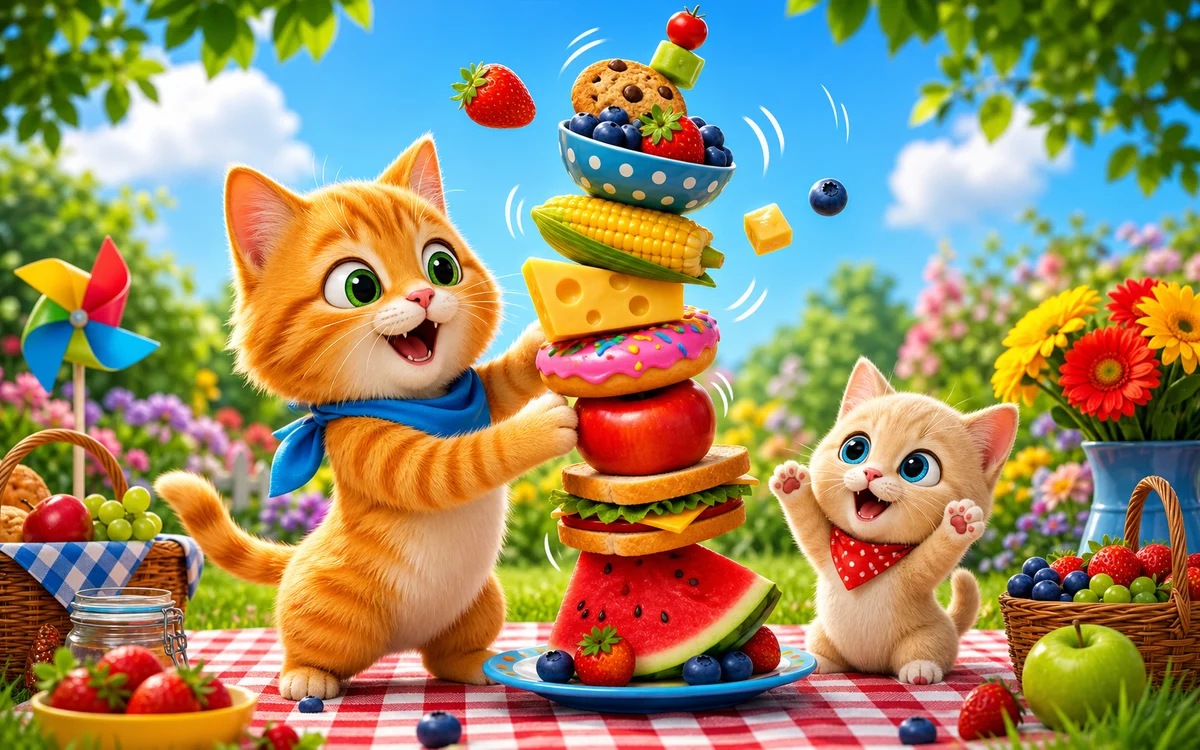
KITTY SNACK STACK
Build two playful kittens the tallest picnic tower in the garden. Time each drop, balance ten wiggly snacks, and watch imperfect landings create a brand-new stacking puzzle.
View gameStrategy and learning guide
Fire Horse Fury: A Timing and Pattern Guide
The challenge
Fire Horse Fury is an endless runner built around visual tracking and jump timing. The horse moves automatically. Your job is to read the path ahead, jump over hazards, and adjust as the pace changes.
Start with the horizon
Looking only at the horse leaves little time to respond. Shift attention toward the incoming path while keeping the horse in peripheral view. Watch one obstacle at a time and identify whether the safer choice is to jump or remain on the ground.
Build a repeatable timing cue
Choose a visible cue, such as the moment an obstacle reaches a particular point in front of the horse. Use the same cue across several attempts. If the jump begins too early or late, move the cue slightly rather than changing everything at once.
Use calm retries
After a collision, pause for one short observation:
- Did the jump begin too early or too late?
- Was the obstacle a jump-over or run-under pattern?
- Did the faster pace change the useful cue?
- Was attention on the horse instead of the path?
Pick one adjustment and restart. Short, focused attempts are more useful than continuing when the player is frustrated or physically uncomfortable.
Turn play into pattern practice
An adult or partner can draw a short sequence of ground and overhead obstacles. The player points to jump or stay before acting it out with a game piece. Then compare the paper pattern with one game round.
This activity may practise timing, visual attention, and prediction inside the game. A distance score does not measure a child's general reaction speed, perseverance, or learning ability.
Explore more timing activities in the Skills Lab, or use the weekly board to alternate active screen play with an offline pattern task.